
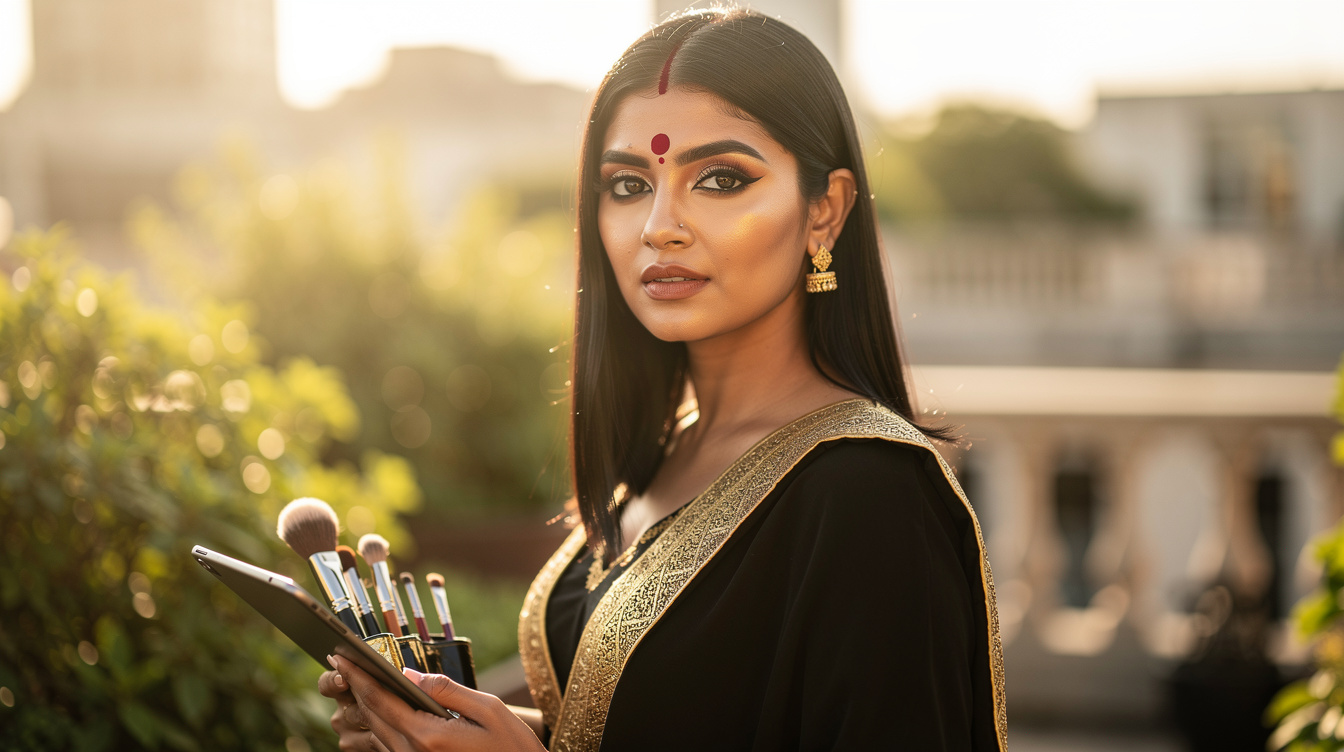
Rohtak’s beauty industry has grown quietly but steadily over the last few years. Walk through Model Town, Delhi Road or the lanes around HUDA Complex on any wedding weekend and you’ll see studios lit up well past midnight, brides being prepped, and a new generation of artists building careers from small first-floor setups. If you’re searching for a serious makeup course in Rohtak in 2026, you’re entering this scene at a genuinely interesting moment — there are more options than ever, but the gap between a good academy and a forgettable one has also widened.
We’ve written this guide for the student who is treating makeup as a career, not a weekend hobby. We’ll walk through what Rohtak’s academies are charging, what “included” actually covers, and the structural factors — batch size, product quality, portfolio shoot — that decide whether you graduate as an employable artist or just someone with a certificate. We’ll also be honest about why a meaningful share of Rohtak students travel to Faridabad and Delhi NCR for their training, and what our own 20-Day Professional Makeup Course in Sector 16 Faridabad covers if you’re considering that route.
One promise upfront — no competitor bashing, no inflated numbers. Just what we’ve seen in the market, what students tell us when they call, and the facts you need to make a confident enrolment decision. If at any point you’d rather just talk to a human, message us on WhatsApp at +91 9354888093 and we’ll answer in plain language.
Rohtak’s makeup education scene in 2026
Rohtak today sits in an interesting bracket. It is large enough to support a full-fledged bridal industry — destination shoots locally, lehenga showrooms, photographers, decorators — but small enough that the makeup-academy market is still maturing. In 2026, you broadly find three categories of options. The first is parlour-attached short courses, often run above existing salons, where the syllabus is whatever the salon owner can teach in their downtime. The second is regional branches of national chains, which bring brand recognition but typically work with larger batch sizes and shared kits. The third — and the most volatile category — is the independent studio-academy run by a working artist, where quality swings dramatically based on who that artist actually is.
What’s changed in 2026 is the student. Earlier, most enrolments were brides-to-be wanting to do their own makeup, or salon staff upskilling. Today, a significant share are career-track students — graduates, career-switchers, women re-entering work after a break — who are evaluating makeup as a primary income source. They are reading reviews, comparing fee structures across Delhi NCR, and asking sharper questions: what brands of foundation will I touch, will I shoot a real bridal model on day twenty, will the certificate actually mean something at my first salon interview?
That shift matters because the academies in Rohtak that thrive in 2026 are the ones with proof — visible portfolios, working artists at the helm, transparent inclusions. The ones still operating on “we have a course, come and join” are slowly losing the serious students. If you’re that serious student, your job in the next few weeks isn’t to pick the cheapest option or the closest one — it’s to read each academy against the structural checklist we lay out below.
Fee ranges across Rohtak academies
Let’s get specific about money, because this is where most enquiries stall. Across Rohtak in 2026, professional makeup classes broadly fall into three price bands. Short basic courses — typically two to four weeks, parlour-style — sit between Rs. 25,000 and Rs. 60,000. These will teach you party makeup, basic engagement looks, hairstyling fundamentals, and a thin slice of bridal. They’re acceptable as a starting point if you’re certain about doing only family and party work locally.
The middle band — what most career-track students consider a real professional makeup course Rohtak option — runs roughly Rs. 70,000 to Rs. 1,30,000. This is where you should expect bridal modules, HD makeup introduction, airbrush exposure, some hairstyling, and at least the suggestion of a portfolio shoot. The high band, Rs. 1,50,000 and above, is reserved for branded national academies and longer diploma-style programmes — three to six months — that include advanced bridal, prosthetics or media looks.
Here’s the catch most students miss. Two academies can charge identical fees and offer wildly different value. The Rs. 90,000 fee at one place might include a full kit, a real model shoot, and small-batch attention. The same Rs. 90,000 elsewhere might exclude products, share one model across the entire batch, and hand you a generic certificate. Always — always — ask for the inclusion list in writing before paying. If an academy hesitates to send a written breakdown of what’s included on WhatsApp, that hesitation is itself the answer.
One more honest note on GST. Many academies quote fees without specifying tax treatment. A Rs. 80,000 course can become Rs. 94,400 once GST is added — a meaningful jump on a student budget. Ask early.
Key factors: batch size, products provided, portfolio shoot
Three structural factors decide whether a course actually trains you or just exposes you to information. Read every Rohtak academy you’re considering against these three.
Batch size. This is the single biggest predictor of skill outcome. In a 25-student batch, the trainer demonstrates once and then walks the room. Each student gets a few minutes of personal correction across an entire day. In a batch of ten or fewer, the trainer can sit beside you, watch your hand, correct your grip on a flat brush, fix the way you’re stippling foundation. The skill gap between these two formats is enormous, and it shows up the moment you handle your first paying client. We cap our own batches at 10 students for exactly this reason — and we’d encourage you to ask any Rohtak academy for their actual maximum, not their average.
Products provided. The textures, pigments and finishes you train on become the textures you understand. If your course only ever uses budget drugstore products, you’ll struggle the first time a bride hands you a MAC palette or a NARS Light Reflecting foundation. A genuinely professional course exposes you to the brands the industry actually uses on shoots and bridals — MAC, NARS, Dior, Huda Beauty, Fenty Beauty, Laura Mercier, Haus Labs, Charlotte Tilbury — across primer, base, contour, blush, eyeshadow, lip and setting categories. Ask each academy for the brand list. Ask whether you keep the products you use, or whether they’re shared kit returned at the end. That distinction matters when you start charging clients and need a kit of your own.
Portfolio shoot. Your portfolio, not your certificate, is what gets you booked. A real assessment shoot — proper lighting, a professional model, a photographer with bridal experience — gives you images you can put on Instagram the day you graduate. A casual phone shoot in a corner of the studio does not. Ask whether the shoot is included in the fee or charged separately. Ask who shoots it. Ask whether the model is a professional or a fellow student doubling up. The honest answers to these three questions tell you almost everything about the course.
Why Rohtak students enrol in Faridabad-based courses
Every batch we run includes at least a few students from Rohtak, Jhajjar, Sonipat and Bahadurgarh. We’ve spoken to enough of them over the years to understand the pattern, and we want to be transparent rather than salesy about it. The reasons aren’t mysterious — they come down to industry density and trainer access.
Faridabad and Delhi NCR sit at the centre of an enormous bridal market. The number of weddings each weekend, the volume of pre-wedding shoots, the density of photographers and decorators, the access to high-end products — all of this is multiples larger than what Rohtak alone supports. For a career-track student, training inside that ecosystem matters: you absorb the standards, the speed, the client expectations of a busier market. Many of our Rohtak alumni return home to launch independent practices, and they tell us the calibration they got from training in Faridabad is what lets them charge confidently when they start.
The second reason is trainer access. In NCR, you can study with active working bridal artists — people who are doing real bridals every weekend and bringing fresh problems and trends into the classroom on Monday. That’s different from learning from a full-time educator who hasn’t done a paid bridal in three years. The Rohtak market has fewer full-time working artists who also teach, simply because the bridal pipeline is smaller. Cross-commute is a real cost — but for many students, the trade-off pays back inside the first three or four months of paid work.
None of this is a knock on Rohtak. If you find a small-batch, working-artist-led course in Rohtak with proper inclusions, take it seriously. If you don’t, the NCR option is worth a candid conversation. We’re happy to be that conversation — message us, tell us what you’re considering, and we’ll tell you honestly whether our course is the right fit, or if your existing shortlist already has a strong choice. Fill the inquiry form if you’d prefer email over WhatsApp.
20-Day Professional Course (Sector 16 Faridabad) — overview, fee, batch
If you’re considering Faridabad as your training base, here’s a clear picture of what we run, what it costs, and what’s included. Our 20-Day Professional Makeup Course is taught at our Sector 16 Huda Market studio, by Shivangi Verma personally. Sessions run from 12 PM to 5 PM for twenty consecutive working days, which gives you a hundred hours of focused, hands-on time on real skin — not lectures, not slideshows, hand on the brush.
Batch size is capped at 10 students. We do this on purpose — it’s the single decision that protects the quality of personal correction every student receives. The curriculum moves from foundational techniques through to advanced bridal looks: HD Makeup, Airbrush, Glass Skin and signature bridal techniques, alongside the soft skills the industry rarely teaches — client handling, consultation, pricing your services, and the basics of running a sustainable practice. We deliberately don’t publish a day-by-day breakdown publicly; we’d rather walk a serious enquirer through the structure on a call so we can flex it to your starting level.
What’s in the fee. Specially curated training products that are yours to use through the course. A professional brush kit that is yours to keep at the end. Certification on completion. A final assessment shoot with a professional model — a real image set you can use to launch your portfolio on day one. And lifetime alumni support, which in practice means access to us when you hit a real-world problem on a paying client three months after graduating.
Fee treatment for the current intake. Our regular fee is Rs. 1,50,000 + GST. For the upcoming June 2026 batch, we’re running a limited-time early-bird rate of Rs. 80,000 + GST — a saving of Rs. 70,000 over the regular fee. This is not the standard price; it is an early-bird window tied to this specific batch.
About your trainer. Shivangi Verma has been working as a professional bridal makeup artist since 2012 — that’s 14+ years in the industry. She is certified by Makeup Studio Netherlands, has personally completed over 1,000 brides, and runs an active bridal practice every weekend with a 5-star rating across 62 Google reviews. She is not a full-time educator who occasionally takes a bridal — she is a working artist who teaches a small batch four to five times a year, which is why these slots are limited. Every session in this course is taught by her personally; nothing is delegated.
About the fear of spending a lakh and learning nothing useful — we hear it on almost every enquiry call, and we take it seriously. The honest answer is the structure itself. A hundred hours on real skin, brand-name products in your hand from week one, ten students per batch so the trainer is right next to you, a professional model on the assessment shoot, and a portfolio you can actually post. If you’d like to verify any of this before paying, we’ll happily share student photographs from previous batches, the brand list for products, and references from past students you can call directly. No serious academy should refuse that. We don’t.
20-Day Professional Makeup Course · Sector 16 Faridabad
Become a Professional Makeup Artist — Basics to Advanced
Hands-on training on real skin, only 10 students per batch, taught personally by Shivangi Verma — an active working bridal MUA with 14+ years and 1,000+ brides. Products, professional brush kit, certification and final assessment shoot all included.
Rs. 1,50,000 + GST → Early Bird: Rs. 80,000 + GST (save Rs. 70,000 — limited time)
💬 WhatsApp +91 9354888093 | Fill Inquiry Form | View Course Page →
FAQ
What is the average fee for a professional makeup course in Rohtak in 2026?
Career-track makeup courses in Rohtak typically sit between Rs. 70,000 and Rs. 1,30,000 in 2026, with shorter parlour-style courses starting at around Rs. 25,000 and branded national diploma programmes going above Rs. 1,50,000. Always confirm whether GST is included and request a written list of inclusions — the same fee can deliver very different value across academies.
Will a 20-day course really prepare me for a career as a makeup artist?
If the format is intensive, hands-on and small-batch, yes. Twenty days of five-hour sessions delivers around a hundred hours of practice on real skin — comparable to many longer courses where most time is spent on theory. The deciding factor is not the calendar length, it’s the contact hours, the trainer’s involvement, and whether you finish with a portfolio you can actually use to start booking clients.
How important is batch size when choosing a makeup academy?
Very important. Skill in makeup is built through repetition under correction — the trainer watching your hand and adjusting it. In batches of 20+, that personal correction time per student becomes minimal. We cap our own batches at 10 students because below that number every learner gets meaningful one-to-one attention every day, and the gap in graduate skill is visible.
What if I take the course and still don’t get clients afterwards?
This is one of the most common fears we hear, and it’s a fair one. A good course doesn’t just teach makeup — it teaches portfolio building, client handling, pricing, and the basics of starting your own practice. Combined with a professional assessment shoot you can post immediately, lifetime alumni support and ongoing guidance from a working artist, you graduate with the assets and judgement needed to start booking, not just the techniques.
Is it worth travelling from Rohtak to Faridabad for makeup training?
It depends on what’s available locally. If you’ve shortlisted a Rohtak academy run by an active working artist with small batches and a real portfolio shoot, that’s a strong choice. If your local options are larger-batch or part-time, training in Delhi NCR — where the bridal market density and trainer access are higher — is often worth the cross-commute. Many of our students from Rohtak, Jhajjar and Sonipat travel daily for the duration of the course and tell us the standards they absorb in NCR translate directly into confident pricing back home.
Am I too inexperienced — or too late to start — to enrol in a professional course?
No. We’ve trained complete beginners with zero prior makeup background and we’ve trained career-switchers in their thirties and forties moving from corporate jobs into beauty. The course is built to take a learner from foundational technique to advanced bridal looks within the same batch, with the trainer adjusting pace per student. If you’re unsure whether the level fits you, get on a quick WhatsApp call with us and we’ll be honest about whether to enrol now or do a short prep first.
Choosing a makeup academy is one of the most consequential career decisions you’ll make in your twenties. Take it seriously, ask sharp questions, and don’t pay anyone who can’t answer them in writing. If our Basics to Advanced course in Sector 16 Faridabad is on your shortlist, message us on WhatsApp +91 9354888093 and we’ll walk you through the structure, the inclusions and the early-bird window for the June 2026 batch — no pressure, just a candid conversation about whether this is the right fit for your career.