
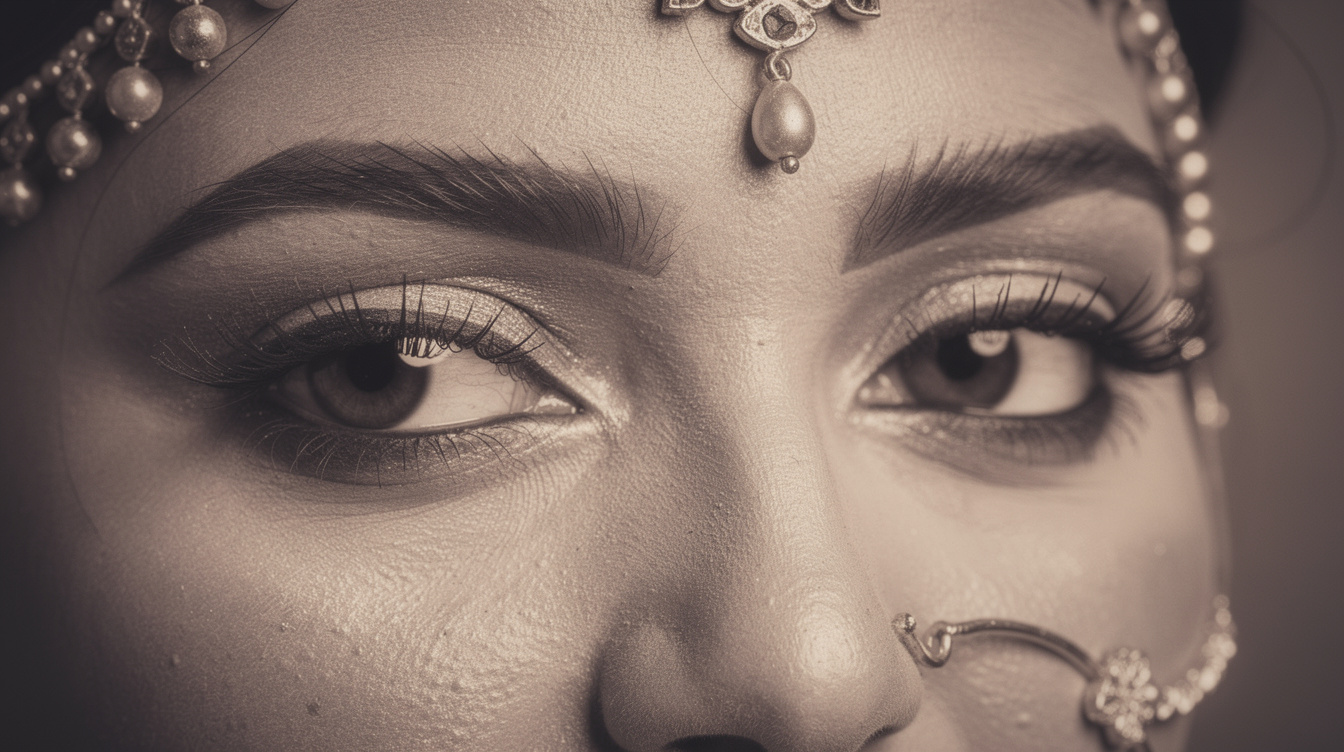
Wedding photographs outlive the wedding day. Every Reel, every album, every framed print on a mantle is the only surviving evidence of how the bride looked the morning she got married — and almost every visual problem we see in those images traces back to one thing: the makeup artist and the photographer never actually talked to each other. We have spent fourteen-plus years on Indian sets working the seam between those two crafts, and the lesson is unmistakable — coordination is not a courtesy, it is part of the deliverable.
This is the eighth week of our Faridabad academy push, and the topic students keep raising in their inquiry calls is exactly this — how do you handle a photographer when you are the makeup artist on set, what do you say in the morning briefing, and how do you prevent the kind of on-camera disasters that ruin an otherwise flawless face. Our 20-Day Professional Makeup Course at Sector 16 Huda Market, Faridabad, treats photography integration as a non-negotiable thread across the syllabus, not an afterthought, because we have watched too many talented MUAs lose clients to images that did not flatter their own work.
If you are an aspiring makeup artist — the Riya persona we keep designing for — you are here because you are scared of two things: spending a lakh on training and learning nothing useful, and not knowing how to behave like a professional on a real wedding set. This guide answers the second. The first we answer further down, with the actual mechanics of how we teach photography handling inside our Basics to Advanced course.
Why MUA-photographer coordination determines final-image quality
The bridal industry has a quiet truth that nobody puts on Instagram — the photographer’s lens is the final judge of your makeup. Skin that looks luminous in the suite can read as oily on the shoot. A blush that flatters in daylight can look bruised under tungsten. A foundation that feels seamless to the bride can flashback white in every group photograph she posts that week. The MUA who does not understand this is solving the wrong problem.
We treat the photographer as a creative partner before the shoot starts. The reason is structural — the bride is paying for the final image, not the face she sees in the mirror. If we hand off a perfect look and the photographer cannot light it, neither of us has done our job. Cross-checking white balance, the angle of the key light, whether they are shooting tethered or freehand, whether the album will be edited warm or cool — these are five-minute conversations that decide whether the wedding gallery will be the artist’s best portfolio piece or a quiet disappointment.
In Delhi NCR specifically, the velocity of bridal events is brutal. Mehendi at noon, haldi at four, sangeet at eight, vidaai at sunrise. Each function has different light, a different lens choice, and often a different photographer on the team. The MUA who only thinks about the bride’s face in the suite, and not about how that face will travel through six different lighting environments in twenty-four hours, will be the MUA who quietly stops getting referred. Coordination is the survival skill, not a soft skill.
Lighting realities — HD finish vs natural light
HD makeup was named for the high-definition cameras it was designed for. The original problem the format solved was simple — standard foundations contained particles that reflected light into the lens at angles a naked eye never saw, producing what we now call flashback. HD finishes minimise that. But HD is not a single thing. There is HD Glass Skin, where the brief is luminosity and the foundation is layered thin with strategic gloss; there is HD Soft Glam, where coverage is fuller and finish is satin; and there is Ultra HD, which we reserve for editorial frames where the camera will see pores.
The choice between them is a lighting decision as much as a skin decision. Glass Skin photographs beautifully under soft window light and properly diffused on-camera flash. It can struggle under harsh direct flash with a hard reflector, because the gloss component picks up specular highlights the camera reads as wet skin. Soft Glam holds up better under unpredictable function lighting — sangeet stages, banquet halls with mixed tungsten and LED, outdoor mandap setups at three in the afternoon when the sun is overhead.
Natural light is the photographer’s first love and the MUA’s hardest test. It is unforgiving. It shows texture, it demands that your base be impeccably blended, and it rewards restraint in the cheek and lip. We brief our students that for a noon haldi or a morning anand karaj, the right foundation is one shade lighter at the centre of the face and matched at the perimeter — because daylight will warm everything by half a stop on its own. The MUA who paints for indoor banquet light and sends the bride into 11 a.m. courtyard sun has set the photographer up to deliver muddy, over-bronzed images that nobody will print.
Brands we trust on Indian skin under camera: NARS Light Reflecting and Sheer Glow for a forgiving HD base; MAC Studio Fix Fluid for sangeet and reception coverage; Charlotte Tilbury Hollywood Flawless Filter as a luminosity layer beneath Glass Skin; Laura Mercier Translucent Loose Setting Powder, used sparingly with a fan brush, for T-zone control without flashback; Huda Beauty cream blushes for soft glam because they read true on camera; Haus Labs Triclone Skin Tech as our editorial workhorse; Fenty Beauty Killawatt for highlight that does not chalk under flash; and Dior Forever Skin Glow when the bride asks for the dewy finish that travels the entire day.
How to brief a photographer before the shoot
The brief happens twice. First on the phone three to five days before the wedding, second in person in the suite on the morning of the function. We teach our students a five-point script for both calls, because most photographer conflicts are conflicts of unspoken assumption, and a script eliminates them.
The phone brief covers the overall finish for each function (Glass Skin for cocktail, Soft Glam for the daytime, fuller coverage for evening reception), the colour temperature the bride prefers in her edits (we ask the photographer to share two reference images so we are not guessing what ‘warm’ means to them), the timeline for each function and how much retouch window we have between shoots, whether they are working with continuous light or speedlights, and one personal note — the bride’s biggest insecurity, which we have already mapped during her trial, so the photographer knows where she does not want to be photographed from.
The in-person brief is shorter and physical. We show the photographer the final base under the same light the ceremony will use, we hand them a thirty-second handover where we point out the highlight zones we have placed deliberately, and we ask where they plan to position their key light so we can adjust the under-eye conceal and the powder pattern accordingly. None of this takes more than ten minutes, and it is the difference between an album the bride loves and an album she politely thanks them for.
We also use this conversation to set our own protection. If the photographer is using a heavy beauty filter or skin-smoothing preset in post, we want to know. Our entire job is to deliver skin that does not need smoothing — and if the photographer is going to smooth it anyway, we adjust our texture choices so the post-processing does not erase the work. That kind of professional candour, exchanged calmly in the suite, is the mark of an MUA who has done this for a living, not a hobbyist with a kit.
Common mistakes that ruin good makeup on camera
Five mistakes account for almost every disappointing wedding image we have ever been called in to diagnose. We list them because every student we train at our professional makeup course in Faridabad has made at least three of them at some point, and naming them is the fastest way to stop repeating them.
The first is flashback from heavy SPF or silica-based setting powders. The bride looks radiant in the suite and grey-white in the album. We solve this by reading the ingredient deck on every product, by setting only the T-zone and side-cheek, and by carrying a non-silica translucent option for daytime shoots. The second is heavy contour under directional light. A contour that flatters at a forty-five-degree angle from the front becomes a streak when the photographer is shooting from above or below — and most ceremony angles are from below the bride, because she is on a stage. We teach contour placement as a function of where the cameras will be, not where the artist is standing during application.
The third is under-eye creasing in HD. Concealer applied too heavily over a moisturiser-rich base will crease within an hour and the photograph will look ten years older than the bride is. We layer, we set with a damp sponge, we revisit before every photographable transition. The fourth is lipstick wear-off in the centre. Centre-of-lip wear-off photographs as a flat, dead mouth — we line the entire lip, blot with one ply of tissue, layer twice, and brief the drapist or a family member on the touch-up cue. The fifth is hairline foundation transfer onto the dupatta or sherwani. White silk shows everything. A primer-set hairline, a barrier of translucent powder along the jaw and temple, and a final mist of setting spray buys you the hours you need.
How the 20-Day Course handles photography integration
This is where we answer the bigger fear — the one every aspiring artist privately carries. I will pay a significant fee, finish a course, and not have the skills to work a real wedding set. We will not insult you by pretending the fee is small. The full course is priced at Rs. 1,50,000 + GST with a current early-bird rate of Rs. 80,000 + GST, a Rs. 70,000 saving that is genuinely time-limited. What we promise in return is that twenty days, twelve to five, in a ten-student batch at Sector 16 Huda Market, Faridabad, will leave you with skills that translate to the wedding floor on day one of your career.
Photography integration is woven across the course rather than ghettoised into one module. From the early days, the looks you build on live models are shot — not to social-media-grade, but to assessment-grade — so you learn what your work actually looks like in a frame. By the final assessment shoot, which we run with a professional model and a working photographer, you will have built the muscle of finishing a face, walking it under a key light, and adjusting it for the lens. The professional brush kit you keep is the one you used during those shoots. The specially curated training products are yours for the duration of the course, because we want you applying NARS, MAC, Laura Mercier and Charlotte Tilbury on real skin — not practising on supermarket alternatives that mislead your eye on density and texture.
Shivangi Verma personally teaches every batch. Fourteen-plus years on the floor, more than 1,000 brides delivered, destination weddings completed across Jaipur, Udaipur, Goa, Jim Corbett, Chandigarh, Kashmir, Sri Lanka and Canada — the instruction comes from somebody still actively working, not a teacher who has not held a brush on a real bride in a decade. Sixty-two Google reviews at a five-star average, twenty-six WedMeGood reviews at 5.0, an Instagram following past twenty-five thousand who watch the work being produced in real time. Real students, real brides, real evidence — exactly what the academy isn’t reputable enough fear is asking for.
Certification on completion, a final assessment shoot with a professional model, and lifetime alumni support — meaning you can message us about a difficult bride or a tricky photographer brief two years after you graduate, and we will still answer — are included in the fee. There is no upsell waiting behind the door. To see the syllabus headlines, message us on WhatsApp at +91 9873048267, or Fill the inquiry form to book a studio walk-through before the June batch closes.
FAQ
Will my makeup flashback in the wedding photographs?
Flashback is caused by light-reflecting particles in foundation, SPF, or setting powder that the camera sees and the eye does not. We brief every bride about the lighting setup their photographer is using and choose the base accordingly — silica-free powders for daytime functions, HD-grade foundation with minimal SPF in the formula for evening flash. With the right combination, flashback is preventable, not inevitable.
How is HD Glass Skin different from regular bridal makeup on camera?
Glass Skin reads as luminous, almost wet, with controlled gloss zones across the high points of the face. Regular bridal makeup tends toward fuller coverage and a more matte cheek. On camera under soft light, Glass Skin photographs as fresh and modern. Under harsh direct flash, it can pick up specular highlights and read shiny — which is why we coordinate with the photographer on lighting style before choosing the finish.
Will the 20-Day Professional Makeup Course really prepare me for a career?
The course is structured around real assessment shoots with a professional model and a working photographer, not just classroom demonstrations. By day twenty you will have applied makeup on live models every day, completed a portfolio shoot, and worked under the same lighting conditions you will face on a wedding floor. With Shivangi Verma personally teaching a ten-student batch, plus lifetime alumni support, you graduate with a portfolio, a brush kit, and a phone you can pick up when you face a tricky job.
What should I tell my photographer to make sure my makeup looks good in pictures?
Three things at minimum — the finish you want (Glass Skin, Soft Glam, fuller coverage), the colour temperature you want your edits in (warm, neutral, or cool), and any features you do not want emphasised. The MUA and the photographer should also speak directly. A thirty-second handover in the suite — pointing out highlight zones and the planned key-light angle — saves an entire album from looking off.
Do you cover destination wedding photography coordination during the course?
Yes. Destination shoots come with their own lighting challenges — outdoor mandaps in midday sun, beach weddings against bright sky, palace interiors with mixed natural and tungsten light. We teach finish selection, retouch logistics, and photographer briefing as part of the advanced segment, drawing on real shoots we have done in Jaipur, Udaipur, Goa, Jim Corbett, Sri Lanka and Canada.
20-Day Professional Makeup Course · Sector 16 Faridabad
Become a Professional Makeup Artist — Basics to Advanced
Hands-on training on real skin, only 10 students per batch, taught personally by Shivangi Verma — an active working bridal MUA with 14+ years and 1,000+ brides. Products, professional brush kit, certification and final assessment shoot all included.
Rs. 1,50,000 + GST → Early Bird: Rs. 80,000 + GST (save Rs. 70,000 — limited time)
💬 WhatsApp +91 9873048267 | Fill Inquiry Form | View Course Page →
If you are still weighing whether the fee is justified, weigh it against this — every wedding image we have ever salvaged on set was salvaged because somebody trained the MUA to think about the photographer’s frame, not just the bride’s mirror. That is what our professional makeup course in Faridabad is built around. The brides are real, the cameras are real, the photographers are real working professionals, and the skills travel with you for the rest of your career.