
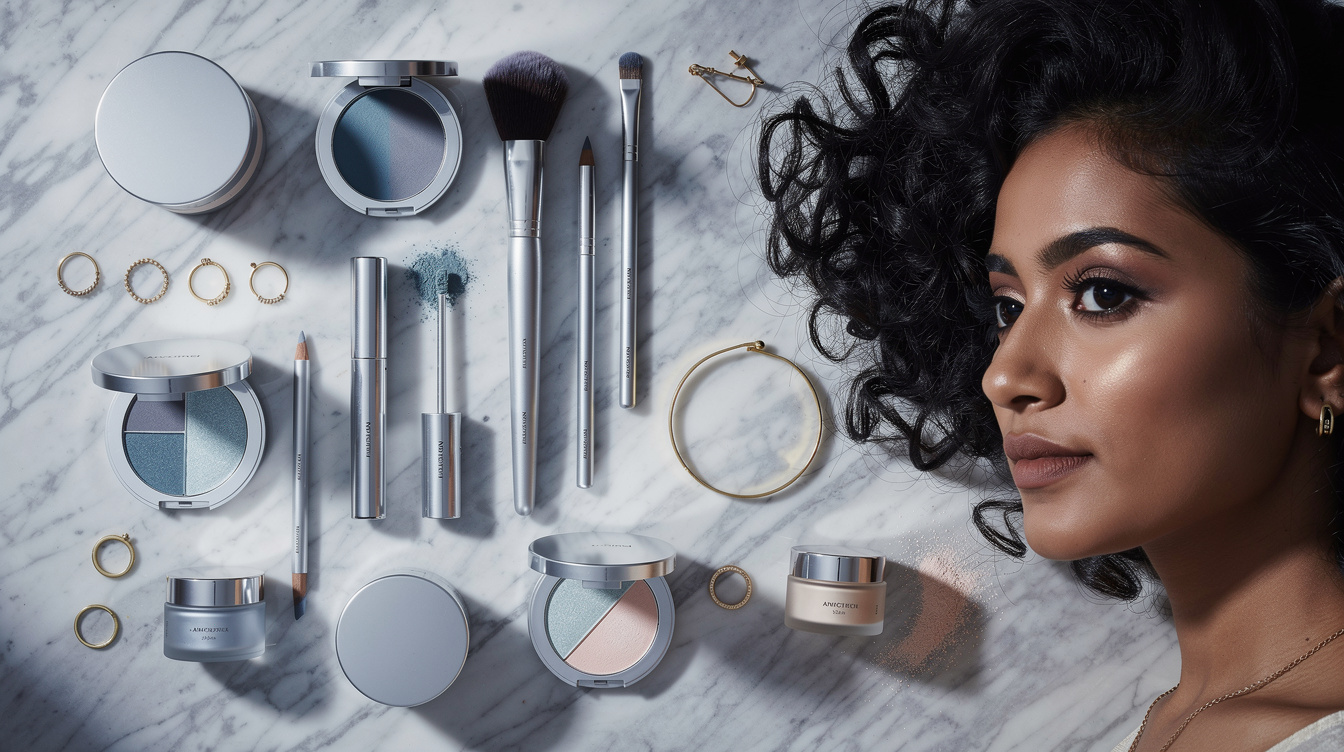
A makeup artist portfolio after course is the single asset that decides whether a bride, a stylist or a small production team writes back to your first cold message — and most freshly certified artists underestimate how quickly that asset has to come together. The certificate matters less than recruiters and brides admit. The Instagram count matters less than people fear. What hires you, in Delhi NCR and everywhere else in 2026, is a tight grid of finished images that proves you can hold a face under HD light, control texture, and deliver three or four distinctly different bridal moods without losing your hand.
We teach this end-to-end inside our 20-Day Professional Makeup Course at Sector 16 Huda Market, Faridabad, and the framework below is the same one we hand our graduates on the day they leave. It assumes you’ve finished an intensive twenty-day programme, you have a final-assessment shoot in hand, and you’re now ten weeks away from your first paid bridal booking. If that timeline feels tight, that’s because it is — and the work you do in the first three months after certification will quietly determine the next three years of your career.
This guide walks through what a hireable 2026 portfolio actually looks like, how to use your final-assessment shoot as a starting grid, the five additional shoots we recommend you add in your first three months, how to set up photography collaborations without paying for them, and what graduates of our Faridabad studio walk out with on day twenty. It’s written for the artist who has done the basics and now needs to convert training into bookings — without faking projects, copying others, or burning out chasing engagement.
What a hireable portfolio looks like in 2026
The 2026 hiring conversation has shifted, even since 2024. Brides scroll faster, photographers cross-reference more carefully, and wedding planners now ask for full-resolution images rather than screenshots. A hireable portfolio in this market is small, sharp and consistent. Twelve to eighteen images is the sweet spot — enough range to show you are not a one-trick artist, tight enough that nothing unfinished sneaks in. We have seen artists with eighty-image grids lose work to artists with fifteen, simply because the smaller grid had no weak frames.
Within that grid, recruiters and brides are quietly looking for four things: skin that holds up at full resolution, eye work that reads from a distance without going muddy in close-up, a clear sense of the texture you favour (HD, glass-skin, soft glam, nude or airbrush), and at least one image that proves you can adapt outside your comfort zone. If your entire grid is one finish, you are a brand — which is fine — but you are not a versatile hire. The artists getting booked in Delhi NCR right now show two or three distinct moods executed cleanly, plus one image that quietly demonstrates range.
Equally important is what is not there. No filters that smooth real skin texture into plastic. No heavy retouching of pores you spent the morning preparing. No stolen photographer credit, no shots taken without lighting control, no dimly lit phone images of finished looks pushed through saturation. The clients in Faridabad and Delhi who pay for serious bridal work look for honesty in skin first — and that honesty comes from real, well-lit, properly credited photography, not from filter stacks.
One last note on tools. The brands you used during training — MAC, NARS, Dior, Huda Beauty, Fenty Beauty, Laura Mercier, Haus Labs, Charlotte Tilbury — are the same names recruiters expect to see on your kit list when they ask. You don’t need to caption every product on every post, but having a working knowledge of which brand serves which finish makes you sound like an artist, not a hobbyist, the moment a real client begins asking technical questions.
Final-assessment shoot images as your starting grid
Every student who finishes our Basics to Advanced course leaves with a final assessment shoot — done with a professional model, a real photographer and a styled set inside our Sector 16 Huda Market studio. Those frames are the foundation of your portfolio. They are the only images on day one that have been shot under proper lighting, with proper retouching, and with full creative direction. Treat them as the spine of your grid for the next ninety days.
From the assessment shoot we typically encourage graduates to publish four to six finished frames immediately. Pick the strongest hero — usually the one where skin, eyes and lip work all land together — and lead with it. Place a clean profile next, then a close-up of the eye work, then a wider full-face frame. Hold back any image that is almost-good-but-not-quite; the urge to publish everything from your first proper shoot is the single biggest cause of grid bloat in fresh artists. We would rather you publish four frames that all look intentional than nine where two are obviously weaker.
Captions matter more than fresh artists realise. For each assessment-shoot image, write three short lines: the look (HD glass skin, soft glam, nude bridal), the products you used in two or three of the key steps, and the photographer’s credit with their handle tagged. Avoid emoji-heavy captions, avoid ‘swipe up’ instructions, and avoid hashtag stacks longer than six. A caption that reads like an artist wrote it pulls more saves than a caption that reads like a marketer wrote it.
Finally, take the assessment-shoot images off the platform they were born on. Push them onto your Google Business listing once you set one up, into your WedMeGood profile when you go live, and onto a simple one-page website if you can build one. Brides do not just scroll Instagram any more — they cross-reference on Google, on WedMeGood and on WhatsApp before they reply. A grid that exists only on Instagram in 2026 is missing two of the three places a paying client looks before booking.
How to add 5 more shoots in your first 3 months
The assessment shoot gets you started; five additional shoots in the first three months give you a portfolio that competes. Here is the cadence we ask graduates to aim for, and the brief for each.
Shoot one — a no-makeup natural beauty editorial. Counter-intuitive but powerful. Brides increasingly ask for skin-like finishes and ‘I want to still look like myself’ results, and a clean nude shoot proves you can deliver them. Shoot indoors, soft window light, no heavy contour, products like Laura Mercier tinted moisturiser or Charlotte Tilbury Beautiful Skin Foundation as the base. Two finished frames is enough.
Shoot two — a soft glam reception look. This is the most-bookable bridal mood in Delhi NCR for 2026. Pinkish-bronze eye, satin skin, glossy lip, soft hair. We see graduates win their first paid reception booking off a single soft-glam image more often than any other look. Brands like NARS, Huda Beauty and Dior backstage all sit beautifully here. Aim for three finished frames.
Shoot three — a heavier traditional bridal moment. Red, deep maroon or wine palette; full eye; defined lip; statement hair. This is the look most paying brides will still want for the wedding day itself, and your portfolio has to prove you can do it without going mask-heavy. Use real jewellery if you can borrow it for the day — paper jewellery shows on camera. Aim for three finished frames.
Shoot four — an HD or airbrush technical demonstration. One image is enough here. The point is to demonstrate a finish under high-resolution capture, with skin that holds up at 100% zoom. Shoot with a photographer who actually owns a high-megapixel body, ask them to deliver one frame at full resolution, and use that frame as your ‘hire me for HD’ anchor.
Shoot five — your first real client. The strongest portfolio image you will ever publish is your first paid bride, photographed properly and credited cleanly. It tells every future client that someone trusted you with the most important morning of their life. Treat the first paid booking as a portfolio shoot in disguise — show up early, light the prep area properly, and brief the photographer to deliver three usable beauty frames in addition to the wedding album.
Photography collaborations — how to set them up
You will not pay for most of these shoots. The economy of a beauty portfolio in Delhi NCR runs on collaborations — TFP shoots, where each member of the team trades work for finished images. Photographers want bridal beauty content for their grids; models want clean portfolio frames; you want the same. The trade is fair when everyone leaves with usable images and full credit.
To set one up, identify three or four photographers in your local area whose lighting, retouching and skin-tone handling you respect. Watch their grid for two weeks before you reach out — does their skin look like real skin, are their HD frames sharp, do they credit the artists they work with cleanly? If yes, write a short, specific message: who you are, where you trained, what mood you would like to shoot, three reference images you have saved, and a window of dates. Avoid generic ‘let’s collab?’ messages — they read as low-effort and rarely convert.
Once a photographer says yes, you take responsibility for sourcing the model, the location and the product list. Faridabad and Delhi NCR have a healthy supply of emerging models on agency books and Instagram who will shoot TFP for clean beauty frames. Confirm the look, the wardrobe and the call time forty-eight hours before. On the day, arrive an hour early, set up cleanly, brief the model on the look, and shoot tethered if the photographer offers it — that way you can watch the skin in real time and adjust.
If you are early in this and want a structured environment to practise it before going independent, the final-assessment shoot inside our Basics to Advanced course is designed to mimic exactly this collaboration setup — a real photographer, a real model, real lighting, with us in the room to coach you through skin and direction calls. By the time you graduate you have already done one full shoot day; the second one outside, on your own, feels far less intimidating.
Sector 16 Faridabad — what graduates leave with
By day twenty, every student in our Sector 16 Huda Market studio walks out with more than a portfolio. The format is intensive — twenty days, 12 PM to 5 PM, capped at ten students per batch — because that is the smallest size at which we can keep a hand on every artist’s work without thinning the trainer’s attention. Shivangi Verma personally leads the room every day. With 14+ years in active practice, 1,000+ brides served, and a five-star rating across 62 Google reviews, our position has always been that an active working bridal MUA teaches the realities of the wedding morning differently from a full-time educator who has not been on a real call sheet in years.
Graduates leave with specially curated training products that are theirs to use throughout the course, a professional brush kit they keep, certification on completion, the final assessment shoot we mentioned earlier, and lifetime alumni support — meaning when a question hits them three months later about a difficult skin tone or a tricky humid-day setting strategy, they can come back to us and we will answer. We treat that ongoing access as part of the course, not as an extra. Most of the artists who go on to build solid books in their first year are the ones who use that alumni line frequently.
The format is built for the working reality, not the brochure. We cover HD Makeup, Airbrush, Glass Skin and bridal techniques, plus client handling and the business skills you will need to quote, contract and deliver — but we keep the day-by-day plan flexible because real cohorts move at different speeds. Some students hit lifting and cut-crease in the first week and need pushing into nude and skin-like territory by week two; others spend the first week on base perfection because their hands need that time. The small-batch format lets us flex.
On pricing, the regular fee is Rs. 1,50,000 + GST and the current early-bird rate is Rs. 80,000 + GST — a saving of Rs. 70,000 — for the limited window before the next batch fills. If you are considering enrolling, the simplest next step is to message us on WhatsApp at +91 9354888093 or fill the inquiry form — we will send you the joining details, the seat count for the upcoming batch, and the early-bird deadline.
FAQ
How many images should a makeup artist portfolio have right after a 20-day course?
Twelve to eighteen finished images is the strong middle in 2026. Four to six come from your final-assessment shoot, the rest from collaborations and your first paid bridal in the three months after graduation. We would rather see twelve consistent frames than thirty inconsistent ones — recruiters and brides judge on the weakest image, not the strongest.
Will a 20-day intensive course actually prepare me for a real makeup career?
It will if the format is hands-on, daily and on real models. Our Basics to Advanced programme runs five hours a day for twenty days — that is roughly 100 hours of supervised practice, with skin work every single day, plus business and client-handling sessions, plus the final-assessment shoot with a professional model. The format is built for someone who wants to start booking work, not someone collecting certificates.
What if I don’t get clients after I finish the course?
This is the fear we hear most often, and it is a fair one. Our answer is structural: the course teaches portfolio building, pricing, client handling, contracts and the basics of being found online — not just makeup technique. Combined with lifetime alumni support, you graduate with the artistic skills and the business framework. Bookings still take consistent effort on your end, but you do not leave wondering ‘what now?’.
I’m a complete beginner — is this the right course for me?
Yes. The programme is designed to take someone with no professional makeup background through to advanced bridal techniques. Because the batch is capped at ten students, Shivangi can pace the room around the slowest learner without holding back the fastest. We have graduated career changers in their thirties and forties as well as fresh-out-of-school students in their late teens — the format flexes around the cohort.
What’s included in the early-bird Rs. 80,000 fee?
The early-bird rate covers the full twenty-day intensive (12 PM to 5 PM, Sector 16 Huda Market in Faridabad), specially curated training products you use throughout the course, a professional brush kit that is yours to keep, certification on completion, the final assessment shoot with a professional model, and lifetime alumni support. The regular fee for the same programme is Rs. 1,50,000 + GST — early-bird is a limited-window saving of Rs. 70,000.
Is the certification recognised?
Our certification is signed by Shivangi Verma — an active working bridal MUA with 14+ years and 1,000+ brides, internationally trained at Makeup Studio Netherlands. In bridal makeup, recognition follows portfolio and reputation more than the name on the certificate; what matters in interviews and bridal trials is the quality of work you can show, the skin you can produce on the day, and how you handle the client. The course is built around exactly that.
Building a hireable makeup artist portfolio after a course is more straightforward than the internet makes it look — but it does require ninety days of focused work, a clear cadence of shoots, and the discipline to publish only your strongest frames. If you are considering joining the next batch and want to start your portfolio inside a structured environment with a professional final-assessment shoot already built in, take a look at Shivangi Verma’s makeup course at our Sector 16 Faridabad studio. We have left every detail of the format, the inclusions and the early-bird structure in the block below.
20-Day Professional Makeup Course · Sector 16 Faridabad
Become a Professional Makeup Artist — Basics to Advanced
Hands-on training on real skin, only 10 students per batch, taught personally by Shivangi Verma — an active working bridal MUA with 14+ years and 1,000+ brides. Products, professional brush kit, certification and final assessment shoot all included.
Rs. 1,50,000 + GST → Early Bird: Rs. 80,000 + GST (save Rs. 70,000 — limited time)
💬 WhatsApp +91 9354888093 | Fill Inquiry Form | View Course Page →