
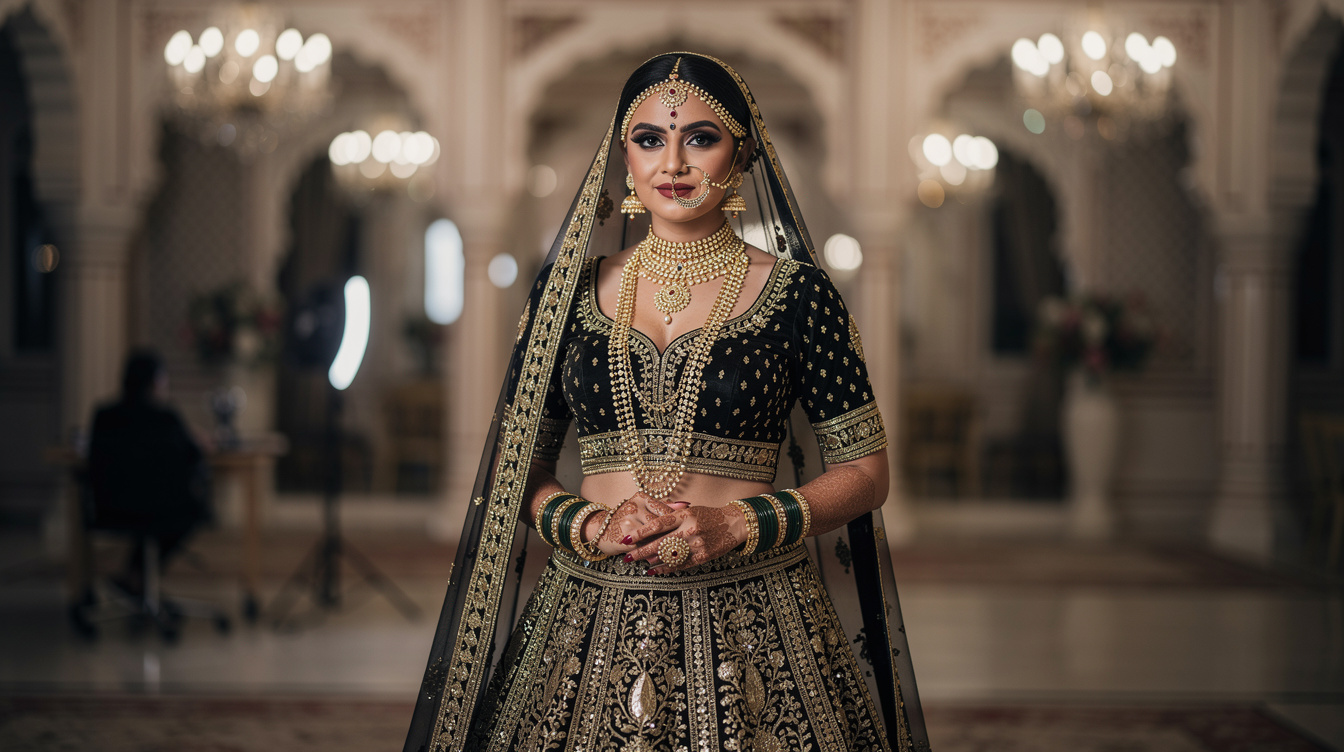
There is a question we hear every week from women who are about to invest serious money in becoming a professional makeup artist: should we sign up for a 20-day course, or push for a 30-day one? The instinct is understandable. More days must mean more learning, right? After 14 years of teaching and over 1,000 brides on our chairs, we want to give you the honest answer — and it is not the one most academies are happy to publish openly.
At our studio in Sector 16 Huda Market, Faridabad, we run an intensive 20-Day Professional Makeup Course from 12 PM to 5 PM, capped at ten students per batch. We get asked to extend it. We get asked to compress it. Both requests come from a real place — fear of wasting money on the one hand, fear of being underprepared on the other. We have seen, repeatedly, what actually moves a student from nervous beginner to bookable artist, and it is almost never the calendar.
This piece is for Riya. For every aspiring artist staring at two brochures with different durations and different price tags, trying to figure out where the real value sits. We are going to break down what actually changes between a 20-day and a 30-day program, what stays the same, and how to read a course brochure honestly. No competitor bashing. No marketing fluff. Just what we know after over a decade of training students who are now booking weddings across Delhi NCR, Jaipur, Goa, Udaipur and beyond.
What changes when a course goes from 20 to 30 days
On paper, ten extra days sounds like a meaningful upgrade. In practice, those ten days are usually filled with one or more of three things: extra theory padding (skin biology slideshows, color theory recaps, the history of cosmetics), more repetition of the same looks on the same skin types in the same lighting, or an extension of advanced modules — airbrush deep-dives, editorial concept briefs, special-effects detours.
None of those are bad in isolation. But the question every aspiring artist needs to ask is whether you, as a working professional in three months, will actually be paid for them. The Indian bridal market — which is where most of our students earn their first serious income — does not pay extra for an artist who has spent two days on prosthetic SFX. It pays for an artist who can deliver flawless HD glass skin under marquee lights, lock airbrush base for fourteen hours through a varmala into a pheras into vidaai, and handle a panicking bride at 4 AM in a Jaipur hotel suite.
Thirty-day programs that are well-designed use those extra days for supervised live shoots, multiple full-face turnarounds with fresh models, and — critically — repeated practice on skin tones, ages and undertones outside the student’s comfort zone. Thirty-day programs that are poorly designed use those extra days to justify a higher price.
The real diagnostic question is not how many days. It is: how many full-face looks will I complete on real human models, with feedback, before I leave? If the answer is twenty in either format, you are getting roughly the same product at different price points. If the answer is forty in one and fifteen in the other, the calendar is irrelevant — pick the one with the higher rep count.
What stays the same — skin science, base, eye, lip fundamentals
Whether the course is 20 days or 30, certain things are non-negotiable. Skin science — understanding skin types, undertones, sensitivities, and how Indian skin behaves under flash photography — is the foundation of everything. Get this wrong and every look on top collapses by the first cocktail. We start every batch here, and a serious 30-day program will too.
Base work is the second pillar. Color correction, dark-circle treatment, foundation matching, contour placement, the difference between airbrush and HD application, the conditions under which Laura Mercier or Charlotte Tilbury or NARS or MAC behaves best on Indian skin — none of this is optional, and none of it can be rushed. We spend a disproportionate amount of time here because every single shaadi, every single editorial, every single party glam stands or falls on whether the base is right.
Eye work is the third. Cut crease, smokey, halo, glitter packing, draping for hooded eyes, decoupling crease shadow from lid sparkle — and lash application without trapping the inner corner. Lip work is the fourth: ombré, glossy nude, bridal red, mauve nudes, the whole spectrum, and the integration of lip with cheek with eye into a coherent face. None of this changes between formats. The only thing that changes is how many supervised iterations you get on each.
Here is the truth: a serious 20-day program and a serious 30-day program will both cover all of the above. Neither will skip the fundamentals. The difference is repetitions, lighting variations, real-skin diversity and trainer attention per student. And those four variables are influenced more by batch size and intensity than by calendar length.
Why intensity beats calendar duration
A 20-day program running 12 PM to 5 PM is 100 hours of focused, in-studio training. A 30-day program running, say, 11 AM to 2 PM is only 90 hours. The longer calendar can actually deliver less time on the lens. We have seen this happen, and it is one of the quietest reasons why some 30-day brochures look attractive on paper but produce graduates who feel undertrained six weeks later.
Intensity matters for a deeper reason than just hour-counting, though. When you train daily with the same trainer, the same batch, the same studio rhythm — your hand learns faster. Skill acquisition in makeup is partly cognitive (you remember which corrector neutralizes which discoloration, you internalize that a peach corrector under the eye is an Indian-skin staple) and largely motor (your blending hand stops shaking by week two, your lash placement gets surgical by week three). Motor learning compresses beautifully under daily, sustained practice. It dissolves under sparse, scattered schedules.
We deliberately structure our 20-Day Professional Makeup Course as a contiguous block — five hours a day, no scattered weekends, no extended gaps. By day eight, students who could not blend a single transition shade smoothly on day one are doing seamless cut-creases on classmates. By day fifteen, they are working on their own bridal looks under timed conditions. By the assessment shoot at the end, they have a portfolio image that did not exist three weeks earlier.
This is the case for intensity. It is also why we are skeptical of any program — 20-day or 30-day — that runs only on weekends or limits practice to two or three hours daily. The calendar gets longer; the actual reps don’t. And reps are what build a working artist.
Sector 16 Faridabad 20-Day Course — depth at a compressed timeline
Here is what our Basics to Advanced course at Sector 16 Huda Market actually delivers in 20 days, 12 PM to 5 PM:
A batch capped at ten students. We do not run twenty-person classrooms. Hands-on attention is the entire reason a student pays for studio training rather than buying a YouTube playlist; if the room is full, the attention is diluted, and the fee stops making sense. Ten is the number that allows Shivangi Verma to personally watch every student’s work, every day, and intervene the moment a brush angle drifts.
Specially curated training products — yours during the course — so you are blending on MAC, NARS, Charlotte Tilbury, Laura Mercier, Huda Beauty, Fenty Beauty, Haus Labs and Dior the same way you will blend on them at a real shoot. We do not let students train on cheap dupes and then walk into their first paid wedding having never touched a real airbrush gun or a real ₹4,000 foundation. A professional brush kit, yours to keep when you graduate, because borrowed tools are not a foundation for a working career. Certification on completion. A final assessment shoot with a professional model — your first portfolio image as a working artist. Lifetime alumni support, which means the conversation does not end at day twenty.
The trainer is Shivangi Verma — 14+ years in the industry, more than 1,000 brides, 62 Google reviews at five stars, and an active working bridal MUA who is personally on set, on a bride’s chair, every wedding season. This last detail matters more than any framed credential on a wall: you are learning from someone who has just come back from a Jaipur shaadi or a Sri Lanka destination wedding, not from someone who taught a textbook in 2018 and never went back into the field. The intuition that comes from current practice — the panicked bride, the unexpected venue lighting, the swap from a printed mood board to whatever the photographer is actually framing — is something you only get from an artist still in the trenches.
On pricing, the regular fee is Rs. 1,50,000 + GST. The current early-bird rate — limited time, tied to our June 1, 2026 batch — is Rs. 80,000 + GST, a saving of Rs. 70,000. We mention this not to hard-sell but because pricing transparency matters when you are weighing a 20-day program against a 30-day one. If you are weighing it, the right next step is a real conversation. WhatsApp +91 9354888093 or Fill the inquiry form and we will walk you through fit, batch dates, and exactly what you will leave with.
Honest take on who actually benefits from a longer format
We have promised this would be honest, so here is the honest answer: a 30-day format genuinely helps a specific kind of student. Career-changers in their thirties juggling family commitments who cannot manage five hours daily without burning out — for them, a paced, longer program with shorter daily sessions can be a real benefit. Students with significant skin-anxiety or hand-tremor who need extra acclimatization on real models. Career artists who already have a base from a different field — fine art, dermatology, photography, theatre makeup — and want a slower, more theoretical experience to layer on top of existing skill.
For everyone else — and this is most aspiring artists we meet, including most of the Riyas reading this — the longer format does not produce a more bookable artist. It produces a more tired wallet. A well-run 20-day program covers identical ground at higher intensity, leaves you with the same certification weight, and gets you on bridal calendars three weeks earlier. Three weeks during peak wedding season can mean the difference between booking your first solo bride at the start of November and missing the season entirely.
The fear we hear most from women like Riya is the one we want to address directly: I’ll spend a lot of money and walk out without real skill. That fear is legitimate. The way to defuse it is not by paying for more days. It is by checking three things before you enroll anywhere. One: is the trainer an active working artist with a current bridal book, not just a teacher? Two: how many full-face looks on real human models will you actually complete? Three: do you leave with a portfolio shoot and the contact of someone who will still pick up your call six months later, when your first paying bride asks something you do not know?
If the answer to those three is yes, the calendar length is largely cosmetic. If the answer is no, no amount of extra days will fix it.
Frequently asked questions
Is a 20-day course really enough to make me bookable as a working makeup artist?
Yes — when the program is intensive (five hours daily on real models) and the trainer is an active working artist. A 20-day, 100-hour, hands-on format covers basics through advanced bridal techniques — HD makeup, airbrush, glass skin, soft glam, nude finishes — with enough supervised iterations on live skin that you leave with a working portfolio shot and the muscle memory to deliver a paid look. The bookability question is less about days and more about whether you have completed enough full-face looks under direct feedback. A well-run intensive program absolutely delivers that, and our alumni network is full of artists who started exactly there.
What is the real difference between a 20-day and a 30-day course in terms of what I’ll actually be paid for?
Indian bridal and party clients pay for clean base, lasting airbrush, glass-skin finish, eye drama, lash work and hair-makeup integration. Both formats teach all of these. Where 30-day formats sometimes diverge is in editorial detours, special-effects modules, runway concepts or extended theory — areas that are interesting but rarely on a working artist’s first-year paid invoices. A focused 20-day program prioritizes the looks that produce real bookings. If you have a clear long-term plan to enter editorial or film makeup, a longer specialist program may make sense later — but it almost never makes sense as a first course.
How do I know I won’t waste this fee and learn nothing useful?
This is the right question, and the only fair answer is to check the structure before you commit. Three diagnostics, regardless of which academy you are evaluating: confirm the trainer is currently working bridals, not just teaching; ask exactly how many supervised full-face looks you will complete on real models; verify you leave with a portfolio shoot, not just a printed certificate. Our 20-Day Professional Makeup Course is built around all three — you train daily on live models, you finish with a final assessment shoot with a professional model, and Shivangi is in active wedding-season practice while she teaches. Beyond that, ten-student batch sizes mean nobody is invisible at the back of the room.
Will I get hands-on practice on real models, or just mannequin work?
Real models, every single day. Mannequin practice has a small place for early brush-handling drills, but skin behaves differently — pores hold product differently, undereyes need different handling, every face teaches you something a silicone head cannot. Our ten-student batch is small enough that every student works on real human models with real skin variation throughout the course, including different undertones, ages, hooded versus monolid eyes, oily versus dry skin and varied lash situations. Without that range, you graduate with a single move that works on a single skin type — which is not a career.
What happens after the 20 days are over — do I just leave with a certificate?
No — and this is the part most academies under-explain. You leave with certification on completion, a final assessment shoot with a professional model that becomes the first image in your portfolio, the professional brush kit (yours to keep), and lifetime alumni support. The alumni piece matters most. Six months in, when your first paying client books an unusual look or a destination wedding lands on your calendar, you can still call us at +91 9354888093. The relationship does not end at graduation, and that continuity is one of the quietest but most valuable parts of training with an active working artist instead of a one-and-done academy.
20-Day Professional Makeup Course · Sector 16 Faridabad
Become a Professional Makeup Artist — Basics to Advanced
Hands-on training on real skin, only 10 students per batch, taught personally by Shivangi Verma — an active working bridal MUA with 14+ years and 1,000+ brides. Products, professional brush kit, certification and final assessment shoot all included.
Rs. 1,50,000 + GST → Early Bird: Rs. 80,000 + GST (save Rs. 70,000 — limited time)
💬 WhatsApp +91 9354888093 | Fill Inquiry Form | View Course Page →
The honest answer to twenty days or thirty is that the right number is the one that matches your life, your trainer’s calendar, and your willingness to show up daily. For most of the women we train — career-starters from Faridabad, Delhi NCR, Gurgaon and beyond — a focused 20-day intensive at our Sector 16 studio is the right shape. If you are still weighing it, talk to us. Our professional makeup course in Faridabad takes ten students per batch, and the early-bird window for the next intake is open now. Bring questions, not assumptions — we will answer every one of them honestly.