
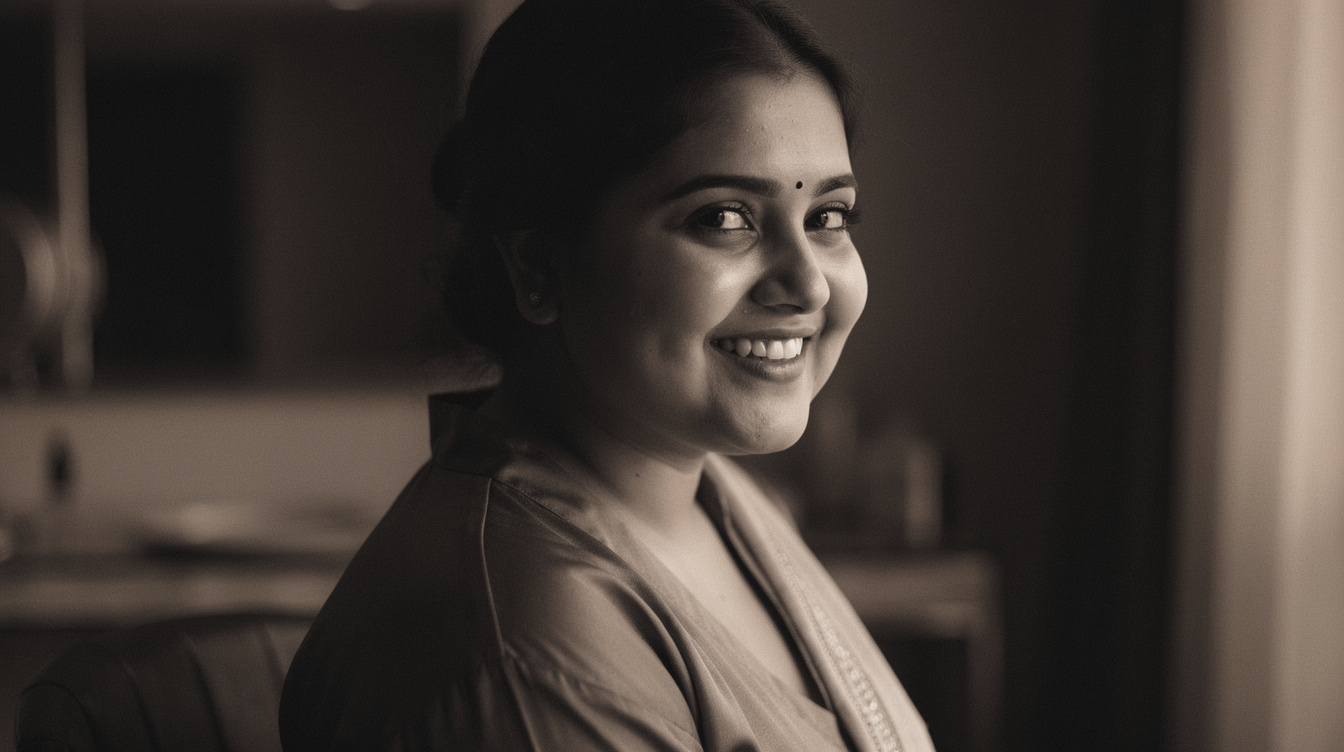
Marwari bridal makeup is a category of its own. The jewellery is heavier, the lehengas are richer, and the rituals run from sunrise tilak to a vidaai that often spills into the next morning’s tea. We have spent the last thirteen years dressing Marwari brides across Faridabad, Delhi NCR, and destination venues from Udaipur to Jaipur, and what we have learned is that this look does not forgive shortcuts. Borla, rakhdi, nath, aad, timaniya, kundan chokers stacked three deep — every piece has to sit on a face that still looks like you, photograph cleanly in 4K, and survive a fourteen-hour day in the company of two hundred relatives.
This guide is the same conversation we have with every Marwari bride who walks into our Sector 16 studio. What the look actually involves, where it differs from a standard bridal brief, what products earn their place on the kit, and how to plan a wedding-day timeline that holds from haldi to phera. If you are three to six months out and comparing artists on Instagram and WedMeGood, this is the article we wish someone had handed you on day one.
Understanding the Marwari Bridal Aesthetic
A Marwari bride is not a generic North Indian bride in red. The aesthetic descends from Rajasthan’s royal courts and carries a very specific visual grammar — a strong red or maroon lehenga (often with gota patti or zardozi), a layered jewellery story dominated by polki and uncut diamonds, and headpieces that frame the entire face. The makeup has to hold its own against all of that without competing with it. That balance is the hardest brief in Indian bridal makeup, and it is the one we are asked for most often.
The Cultural Cues That Shape the Look
The borla sits centred on the forehead, which means the bindi placement and brow shape have to mathematically align with it. The nath — often a heavy gold ring threaded with pearls — runs from the nostril to a hair clasp, which changes how we contour the cheek and how we apply lip product (no greasy gloss that smudges against the chain). The chooda is bright red and ivory, so cool-tone reds fight against it. Every detail informs another. Marwari makeup is engineered around the jewellery, not the other way around.
Where Marwari Wedding Makeup Differs From Other Bridal Briefs
Compared with a Punjabi or Sindhi brief, a Marwari bride asks for slightly more saturation in colour but significantly less weight in product. The rituals are longer (multi-day, multi-function) and many take place outdoors in courtyard settings — Jaipur sun, Udaipur lake breeze, Jim Corbett dust. We adjust our base philosophy accordingly: less coverage where you do not need it, surgical coverage where you do, and a finish that lets the skin breathe under heavy headpieces.
The Signature Marwari Bridal Look, Element by Element
When a Marwari bride sits in our chair for the wedding day, here is roughly how the face is built. We share this in detail because the most common fear we hear at consultations is “I don’t want to look like someone else.” Knowing the elements lets you have a real conversation with any artist, including us, about what stays and what changes for your face.
Base & Skin: The Skin-Like Finish
We almost always start with a hydrating prep — a Laura Mercier or Charlotte Tilbury primer pressed in, never rubbed — followed by a thin, buildable base. Our most-requested finish is HD Glass Skin: the foundation reads as your own skin one shade more even, with a soft inner glow that reflects light cleanly under both daylight and DSLR flash. For destination venues with extreme heat, we move to airbrush — typically a Dior or MAC airbrush formula — because the micro-mist sits flatter and survives humidity better than any cream base. Concealer is precision-only: under-eyes, around the nose, and the corners of the mouth. We do not blanket the cheeks.
Eyes: Cut Crease, Smoke, or Halo — Chosen for Your Eye Shape
The classic Marwari eye runs warm — bronze, copper, antique gold, sometimes a deep maroon for the phera ceremony itself. We work primarily from Huda Beauty palettes for pigment payoff, with NARS and MAC for transition shades. The shape we cut depends entirely on your eye anatomy: a hooded eye gets a halo or a soft smoke; a downturned eye gets a wing that lifts the outer corner; an almond eye can carry a true cut crease without looking dated. Lashes are layered — a natural strip first, individual flares stacked on the outer third — because Indian wedding lighting is unforgiving on flat lashes.
Lips, Cheeks, and the Bindi That Ties It All Together
For lips, a warm red or maroon is the traditional pick — we lean on MAC’s matte ruby families, NARS Powermatte, and Charlotte Tilbury’s deeper shades. We always set with a translucent powder through a tissue so the lipstick survives a day of sips, eats, and embraces. Cheeks are a soft, blood-warm flush — never a hard contour, never a striped highlight. Haus Labs and Fenty Beauty cream blushes melt cleanly into a glass-skin base. The bindi is hand-drawn or applied as a stick-on depending on the design your jeweller has built around the borla; we keep a stock of both and match in studio.
HD, Airbrush, or Glass Skin — Choosing the Right Technique
This is the most common question we get on WhatsApp before a trial is even booked. The honest answer is that none of these techniques is “best” in the abstract — they are tools, and the right one depends on your skin type, the venue, the time of year, and the photography team. Here is how we decide.
- HD Glass Skin — our most-requested finish. Best for indoor venues, well-controlled lighting, and brides whose skin is in good condition. Reads luminous and youthful in close-ups.
- Ultra HD — built for extreme close-up photography (4K cinematic teams, drone-fed video). The product blurs pores without flattening dimension. We use this for editorial shoots and reception looks.
- Airbrush — the right answer for destination weddings, summer pheras, and any bride who breaks out under traditional foundation. Survives sweat, hugs, and 14-hour days better than any other base.
- Skin-like / Nude — for the roka, the haldi, and the morning ceremonies, we usually do less. A skin-like finish keeps you photographing as yourself in the family pictures that will live in albums forever.
Every one of these techniques is part of our standard service, and we discuss the right call function-by-function during the trial. There is no surcharge for choosing airbrush over HD — it is included in the same price.
Making the Look Last Through 14+ Hours of Rituals
Marwari weddings are long. The pheras alone run two to three hours, and that is after hours of pre-ceremony rituals. We hear the same fear in almost every consultation — what if the makeup slides off by vidaai? The reviews on our WedMeGood page mention this specifically: brides write that the makeup and hairstyle were intact till late hours, and that is by design, not by accident.
The Prep, Prime, Set Protocol
We exfoliate gently, hydrate, and prime in three layers — a hydrating primer, a grip primer where the foundation needs to hold, and a pore-blurring primer on the T-zone only. Foundation goes on in thin layers and we set at every stage with a fine, untinted Laura Mercier translucent powder. Cream products are locked with a powder of the same shade family. The final step before jewellery is a hydrating setting spray that takes the powder edge off and brings the skin back to a glass finish.
Touch-Up Discipline During Pheras and Vidaai
Shivangi personally stays with you for the wedding day — touch-ups are not delegated to an assistant, and the team includes a dedicated draping expert and our hairstylist on standby. Between rituals we blot, we re-press concealer where tears have moved it, and we re-apply lip in the exact shade we built the trial on. The vidaai is the one moment we plan around tears: long-wear lashes, waterproof liner, and a tissue-set lip mean you can cry honestly without a single streak in the photographs.
The Marwari Wedding Calendar — A Look Plan for Each Function
A typical Marwari wedding stretches across four to seven functions. Treating each one as the same makeup brief is how brides end up looking tired by the time the camera matters most. We build a function-specific look plan during the trial.
Tilak, Mayra, Mehendi, and Sangeet
The pre-wedding functions ask for soft-glam energy — a skin-like base, a bronzed eye, a pink-nude lip. The mehendi calls for a comfortable, low-product day because you will be sitting for hours with hennaed hands; we keep things minimal here. The sangeet is the loudest of the pre-functions and earns a smoky eye, deeper lip, and stronger lashes for stage and dance-floor lighting. Our portfolio has dozens of multi-function references if you want to see the visual progression before booking.
Pheras Day and Reception
The pheras are the deepest, most traditional look — full HD or airbrush base, warm bronze-to-maroon eye, classical red lip, and the heaviest set of jewellery. The reception, often the next evening, is where we go editorial: a smoked metallic eye, a glossier lip, and a slightly cooler base for indoor banquet lighting. The lehenga changes; the philosophy of looking like yourself does not. For the full breakdown of our bridal makeup service and how each function is priced and planned, the dedicated service page covers timelines, team, and inclusions.
Booking a Marwari Bridal Trial in Delhi NCR
We work out of our Sector 16 Huda Market studio in Faridabad, and most of our Marwari brides come in from Delhi, Gurgaon, Noida, and the Faridabad belt itself. A trial is not an upsell — it is the single best way to make sure your wedding-day face matches your imagination. Most of the consistency reviews we receive are because the trial was treated as a real working session, not a 30-minute swatch.
What a Trial Actually Includes
An average trial runs 90 to 120 minutes. We discuss your lehenga colour and jewellery in detail (please bring photographs and, where possible, the actual chooda or borla), test base shades in the studio’s mixed daylight, and build the eye-and-lip you want for either pheras or reception. You leave with the exact look photographed under multiple lighting conditions, and we both agree on what stays and what gets adjusted before the wedding day.
Pricing, Inclusions, and Custom Quotes
Our published WedMeGood starting prices are ₹28,000 per bridal function, ₹25,000 for engagement, ₹8,000 for party or family makeup, and ₹50,000 per function for outstation weddings. These are starting references — every bride gets a custom quote that accounts for number of functions, destinations, and team scope (hair, draping, photography). We send the breakdown openly over WhatsApp so there are no last-minute surprises. We have already taken our destination service to Jaipur, Goa, Jim Corbett, Udaipur, Chandigarh, Kashmir, Sri Lanka, and Canada — the team travels together as a single unit.
Frequently Asked Questions
Will I still look like myself with traditional Marwari bridal makeup?
Yes — that is the core of how we work. Our most-repeated review line is that brides feel pretty without anything being overdone. The Marwari look carries a lot of weight in the jewellery and the lehenga, so we deliberately lighten the makeup philosophy underneath: HD Glass Skin or skin-like base, surgical concealer, and a face that reads as yours, only more even. Heavy, mask-like makeup actually fights with Marwari headpieces; a quieter face lets the borla and nath be the protagonists.
How long will my Marwari bridal makeup last in summer pheras?
For summer or destination ceremonies we move to airbrush as the primary base, layer a long-wear setting protocol, and pack a discreet touch-up kit. Real client reviews on WedMeGood specifically call out that the makeup and hair stayed intact till late hours. Shivangi personally stays for the wedding day, so any blot, re-press, or lip refresh between rituals is handled by the same artist who built the look — not handed off to a junior.
Will my makeup flashback in HD wedding photography?
Flashback is almost always a product-and-shade problem, not an “HD makeup” problem in general. We test foundation and powder under flash during the trial, avoid the high-SPF or silica-heavy formulas that ghost in DSLR images, and use Ultra HD techniques for cinematic close-ups. With international training from Makeup Studio, Netherlands, photography readiness is built into how the base is mixed, not added on at the end.
How is HD Glass Skin different from a regular Marwari bridal base?
A heavy traditional bridal base often uses thick foundation and powder all over, which can read flat and aged in HD photography. HD Glass Skin uses a thinner, lit-from-within base, surgical concealer, and dewy setting — the skin still looks like skin. It is one of our signature techniques and is most-requested by brides who do not want the matte heaviness associated with older bridal makeup.
Can your team travel for a destination Marwari wedding in Udaipur or Jaipur?
Yes. Destinations are part of our regular calendar — we have already worked Jaipur, Udaipur, Jim Corbett, Goa, Chandigarh, Kashmir, and internationally in Sri Lanka and Canada. The full team — Shivangi, hairstylist, draping expert, photographer, and assistant — travels together as one unit so the wedding-day workflow stays the same as it would be at the Faridabad studio. Outstation per-function pricing starts at ₹50,000 with a custom quote built around your itinerary.
Book Your Bridal Makeup Consultation
Shivangi Verma brings 13+ years of expertise to make your special day unforgettable. Based in Sector 16 Faridabad, serving brides across Delhi NCR and destination weddings worldwide.
📞 +91 9873048267 | 💬 WhatsApp Us | 📍 Booth 70-71, First Floor, Sector 16 Huda Market, Faridabad